NIV Bible version, Offline app
- 4.8
- Rating
- 1.00M
- Installs
- Free
- Price

 Analysis by App-foxy
I spent time with NIV Bible as a reading and listening companion, and my first impression was that it aims for a very focused job: bringing the New International Version into a simple mobile Bible experience, with audio as an important part of the package. That focus is useful when I want a passage in front of me without opening a general-purpose reading platform, but it also means the app is best judged by how smoothly it supports quiet reading, listening, searching, and returning to familiar passages rather than by how many extra tools it offers.
It belongs to the Books & Reference category and comes from Mobile Bible apps. The app is free to start, with in-app purchases priced at $8.99 per item, so I would approach it as an accessible way to explore the NIV before deciding whether any optional purchase fits my routine. Its audience is broad: the content rating is Everyone, and the app is available for devices running Android 7.0 or later. That makes it a practical candidate for an older phone that may not handle newer, heavier apps comfortably.
The public response is encouraging, with a 4.8 average from around 46 thousand ratings and more than a million installs. Those figures do not replace personal testing, but they do suggest that the basic reading experience has connected with a substantial audience. I can understand why: the app does not need a complicated learning curve to become useful. If I already know which book or chapter I want, the value is in getting there quickly and settling into the text.
You May Also Like

 Blood Strike: 2.5 Anniversary
Blood Strike’s Loadouts Turn Every Drop Into a Tactical Gamble
A close look at Blood Strike’s custom loadouts: how fast access to signature weapons reshapes its battle royale rhythm, rewards preparation, and narrows the gap between fights.

 Pandora - Music & Podcasts
Pandora’s Music Is Easy to Start, but Harder to Recover
Pandora’s strength is its low-effort path from a seed to a station. Its weak spot is how much confidence it asks you to place in connection, setup, and quiet recovery.

 8 Ball Pool
 Is Built on Rivalries, Rematches, and Routine
A close look at the rivalries, rematches, shared routines, and unanswered safety questions that turn a quick pool match into a persistent mobile community.

 Samsung Music
’s Quiet Strength Is Playing What You Already Own
Its reach comes less from spectacle than from dependable access to a personal library. That simplicity is both the app’s strongest retention engine and its ceiling.

 AccuWeather: Weather Radar
AccuWeather Review: A Quick, Clear Forecast for Everyday Decisions
For everyday plans, the best forecast is the one you can understand quickly. AccuWeather makes rain timing, radar, and local conditions easy to act on, with a few trade-offs.

 Hill Climb Racing
Why Hill Climb Racing Still Turns Crashes Into One More Run
A tiny car, a bumpy hill and one more upgrade: Hill Climb Racing keeps resurfacing because its simple chaos makes every near-miss feel personal.
More From Our News Desk



How the experience changes when the connection is unreliable
I find that unreliable service changes the best way to use this app: instead of making audio the default, I treat the text as my first stop and use listening when the connection is steady. That small adjustment keeps a brief reading session from becoming a troubleshooting exercise. It also makes it worth thinking ahead about where a passage needs to be available and what backup will keep the routine going.
Network-dependent moments deserve attention
The most important practical question for any Bible app with audio is what happens when the phone is not connected. With this app, I would not assume that every part of the experience behaves the same way offline. Text reading may feel straightforward in a weak-signal situation, while audio, first-time loading, updates, or other online-dependent actions can be more sensitive to connectivity. That distinction matters because a reader may open the app in a place where browsing works slowly or not at all, then expect a listening session to begin immediately.
My advice is simple: test the exact routine you care about before relying on it. Open a passage while connected, try the listening control, then repeat the process in the kind of location where you normally lose service. A commute, a basement room, a rural road, or a crowded event can expose problems that never appear on a home network. This is a better test than assuming that the word “audio” automatically means every recording is ready for use without a connection.
That caution is not a criticism of the translation or the reading design. It is a reminder that mobile Bible use has two layers: access to the words and access to the delivery method. If I am studying quietly, a delayed load may be a minor annoyance. If I am using the app to follow a passage while walking or preparing for a group meeting, the same delay can interrupt the whole rhythm.
Reading and listening serve different kinds of attention
The NIV is often chosen for readable, contemporary English, and that makes the app approachable for someone who wants to follow a passage without wrestling with unusually formal wording. I find that especially helpful when moving between personal reading and audio. Listening asks me to keep track of the flow without repeatedly stopping to decode a sentence, while reading lets me slow down, compare nearby verses, and notice details that can pass by when the text is spoken.
I would use the two modes for different jobs rather than treating audio as a replacement for reading. For a morning walk, listening can turn a short stretch of time into a regular habit. Later, I might return to the same chapter visually and mark the point where my attention drifted. This two-step workflow is more useful than simply pressing play and assuming that passive listening has covered the same ground as careful reading.
There is also a practical trade-off for people who share space with others. Audio is convenient when my hands are occupied, but it needs headphones or a quiet setting if I do not want to disturb anyone. Reading is more discreet and usually easier to pause in a public place. The app’s audio emphasis is valuable, but it should complement the text rather than dictate how every session takes place.
Mobile contexts reveal the real strengths
I can see this app fitting naturally into small, repeatable moments: reading a chapter during a lunch break, listening while doing household chores, or checking a verse before a conversation. A dedicated Bible app is quicker for those tasks than opening a browser, searching the web, dismissing unrelated results, and hoping the page remains comfortable on a phone screen. The reduced friction is the main reason I would keep it installed.
One realistic routine would be a short evening session. I might begin with the text while the phone is connected, choose a passage, and listen for a few minutes. If the connection becomes unreliable, I would switch to reading rather than repeatedly restarting playback. Before leaving home the next day, I would repeat the passage with a stable connection if audio was central to the plan. This approach avoids making a fragile network connection the deciding factor in whether the habit succeeds.
The app is also suitable for someone who wants a Bible available on an older Android phone. Because the minimum operating system is Android 7.0, it is not restricted to only the newest devices. Still, an older phone can have limited storage, battery wear, or slower app loading, so I would watch how much space and power the audio side consumes in my own setup. Those are device-level realities, but they directly affect whether a listening-focused app feels dependable.
What happens when a session fails
Every mobile reader eventually encounters a failed load, a stalled audio start, or a session interrupted by a call. The useful question is not whether such moments can occur, but whether I have a sensible recovery plan. With this app, I would avoid tapping the same control repeatedly. Instead, I would return to the passage, check the connection, and try the text view first. That gives me a fallback that keeps the reading session alive even if listening is temporarily inconvenient.
For an important appointment or group discussion, I would prepare earlier rather than opening the app for the first time at the exact moment I need it. I would locate the book and chapter, confirm that the text opens normally, and test audio while connected. This is a small habit, but it separates casual use from dependable use. It also answers a question many readers have: can the app be trusted in a critical moment? My answer is that it can be part of a dependable routine, but I would still avoid making any mobile app my only plan when connectivity matters.
Notifications and interruptions create another kind of failure. If I am listening while doing something else, a phone call or message can break concentration even when the network is perfect. Reading is easier to resume because I can visually find my place, whereas audio may require a moment to identify where I stopped. For that reason, I prefer shorter listening sessions when I am multitasking and longer reading sessions when I want to reflect carefully.
Using it carefully on limited data
People with restricted mobile plans should treat audio differently from ordinary text browsing. A passage of text is generally a lightweight activity compared with repeatedly starting or loading spoken content, so I would reserve listening for Wi-Fi whenever possible. If I am away from home, I would choose reading unless I have already confirmed that my plan and routine can handle the audio use comfortably.
That does not make the audio feature impractical. It simply means the best setup depends on how I use it. Someone who listens briefly and mostly reads may find the app economical in everyday use. Someone who plays long sessions over cellular data should be more deliberate, especially if the phone also handles music, video, backups, and other data-heavy tasks. The app is free to download, but “free” does not mean that network use is irrelevant.
I would also keep an eye on battery behavior during longer listening sessions. Audio playback can be convenient, yet it keeps the phone active for longer than a quick verse lookup. A low-battery situation can end a session just as effectively as a lost signal. My practical solution is to use audio when the phone has comfortable charge remaining and switch to text when I need a lighter, more discreet activity.
Where it compares well with familiar alternatives
The usual alternatives are a printed Bible, a browser search, or a broader Bible platform with several translations and study resources. A printed Bible wins for independence from batteries, networks, and notifications. It also offers a physical sense of place that I do not get from a screen. If I want long, uninterrupted study away from electronics, print remains the better choice.
A browser can be faster for a one-time search, particularly when I do not want another app installed. However, a browser also brings distractions and depends heavily on a stable connection. NIV Bible makes more sense when I expect to return to the same translation repeatedly and want a dedicated place for that activity. The trade-off is that a specialized app may feel narrower than a large study platform.
Someone looking for extensive cross-references, scholarly notes, original-language tools, or a large library of translations may prefer a more feature-heavy Bible service. I would not choose this app solely because I want an all-in-one study desk. Its appeal is stronger for readers who value a direct NIV text and audio-oriented access without needing every advanced research feature in the same screen.
Who should use it, and who should skip it
I would recommend it to a person who wants the NIV in a phone-friendly format, appreciates the option to listen, and prefers a focused reading tool over a crowded study suite. It is also a reasonable choice for families or mixed-age households because the content rating is Everyone, provided each person’s device and connectivity habits are taken into account.
I would be more cautious if my main requirement were guaranteed use in places with no service. I would test the exact offline behavior first instead of assuming it. I would also look elsewhere if I needed a printed-page experience, extensive academic resources, or a single app that manages many translations and study systems in depth. Those are not defects in this particular product; they are signs that its focused design may not match every reader.
The current version is 1.64, and I would keep the app updated through the normal device process when practical, especially if I rely on it regularly. Updates can matter for compatibility and stability, but I would still test the app after an update before using it for a trip or organized session. That small check is worthwhile for any app whose usefulness depends on quick access at the right moment.
After using NIV Bible, I see it as a practical companion rather than a complete replacement for every Bible format. Its strongest quality is the combination of a familiar translation and a listening option in a dedicated mobile setting. Its main limitation is that connectivity, device condition, and data habits can shape the experience more than a store summary suggests.
My final recommendation is positive for readers who want a straightforward NIV app and are comfortable testing their own network routine. Start with text reading, try audio in both strong- and weak-signal locations, and decide whether the free experience covers your needs before considering an in-app purchase. If that workflow matches your life, this is a useful way to keep Bible reading close at hand without turning it into a complicated project. If your priority is absolute offline certainty, deep study tools, or freedom from phone interruptions, a printed Bible or a different kind of Bible platform will serve you better.
FAQs for NIV Bible version, Offline app
01What features does the NIV Bible Offline app offer?
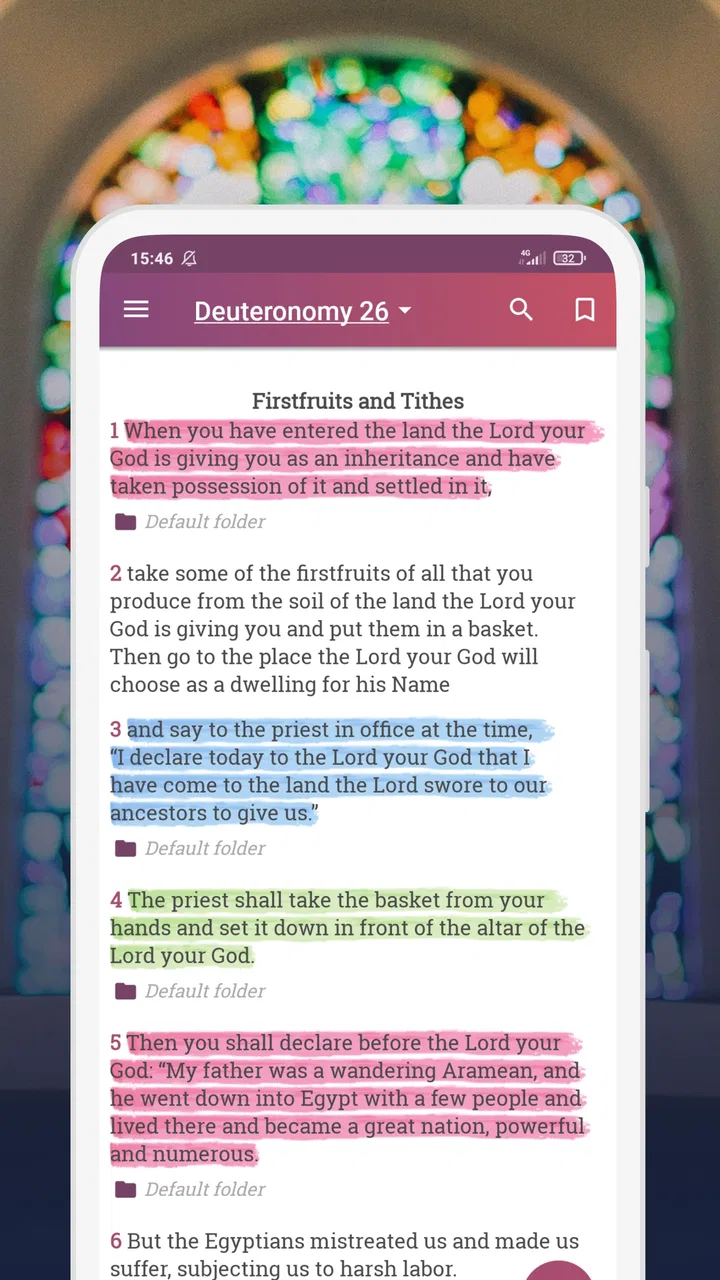
The NIV Bible Offline app provides users with the complete New International Version of the Bible, accessible without an internet connection. It includes features such as daily verses, a search function, bookmarks, and reading plans. Users can also highlight text and take notes, making it a comprehensive tool for study and reflection.
02Is the NIV Bible Offline app truly usable without an internet connection?
Yes, the app is designed to function fully offline. Once downloaded, the entire NIV Bible is accessible without needing an internet connection. This makes it convenient for users who wish to read or study the Bible anytime and anywhere, without worrying about connectivity issues.
03Are there any additional costs or in-app purchases in the NIV Bible Offline app?
The core features of the NIV Bible Offline app are free. However, there may be optional in-app purchases for additional content or features, such as different translations, audio versions, or advanced study tools. It's advisable to check the app details for specific pricing information.
04How user-friendly is the interface of the NIV Bible Offline app?
The NIV Bible Offline app boasts a user-friendly interface designed for easy navigation. Whether you are a seasoned user or new to digital Bibles, the app’s layout is intuitive, with clearly labeled sections for quick access to books, chapters, and verses. Customization options enhance the reading experience.
05Can I sync my notes and highlights across devices with the NIV Bible Offline app?
If the app supports account creation or login, it may offer cloud syncing for notes and highlights. This feature allows users to access their personalized content across multiple devices. However, if the app operates entirely offline, syncing might be limited to local storage on the device.
Pros
- Offline access to all content
- User-friendly interface
- Comprehensive search function
- Daily devotionals included
- Customizable reading plans
Cons
- Ads can be intrusive
- Limited translation options
- No audio Bible feature
- Requires space for downloads
- Occasional lag in navigation

NIV Bible version, Offline app
Gallery